Watch
The Art and Science of Watch Movement Decoration

In the realm of haute horology, the embellishment of watch movements transcends mere aesthetics, intertwining historical tradition with mechanical necessity. From the nascent stages of watchmaking in the 16th century, exemplified by the 'Nuremberg Eggs,' decorations initially served to elevate the visual grandeur of these exclusive devices, marking them as symbols of wealth and status. Over centuries, these decorative practices, encompassing intricate engravings, polished components, and gilding, evolved to fulfill practical functions beyond their ornamental appeal. Today, movement decorations are a cornerstone of high-end watchmaking, governed by stringent 'stamps of approval' such as the esteemed Geneva Seal and Patek Philippe Seal, signifying the pinnacle of handcraftsmanship and stylistic excellence. This article explores eight fundamental movement decoration techniques, offering a glimpse into their rich history and enduring significance in contemporary watchmaking.
Exploring the Refined Techniques of Watch Movement Embellishment
Engraving: One of the oldest and most elaborate forms of watch decoration, engraving, often categorized under 'Métiers d'Arts,' has been used since the early days of watchmaking. Initial timepieces like the Nuremberg Eggs featured extensive engraving on cases, dials, and movements, making time-telling almost secondary to their artistic expression. Achieved painstakingly by hand, these engravings narrate stories or mirror societal trends, with precision so vital that a single misstep could necessitate remaking an entire component. Historically, engraving symbolized power and wealth, a tradition that persists in modern luxury watchmaking. Brands like A. Lange & Söhne and Patek Philippe are celebrated for their meticulous engraving work, especially on balance cocks and skeletonized movements, showcasing intricate floral patterns and volutes that add profound visual depth.
Côtes de Genève (Geneva Stripes): This popular decoration emerged in late 19th-century Geneva, primarily to mitigate issues of dust and oil accumulation in less water-resistant watch cases. The aesthetic 'pattern of scratches' also effectively concealed manufacturing imperfections. Traditionally applied by hand using abrasive tools, modern techniques frequently employ CNC machinery for uniform stripes, though master artisans still perform this by hand. While typically straight and parallel, variations include circular, spiral, or wavy patterns, such as Omega's 'Geneva Waves in Arabesque.'
Black Polishing (Sallaz / Spéculaire): Distinctive for its mirror-like finish, black polishing, or 'poli noir,' is a challenging technique reserved for steel movement parts like bridges and screw heads. Originating in the 18th century, this hand-polishing process, often taking years to master, results in an impeccably flat surface that reflects light singularly, appearing black from certain angles. Brands like Grand Seiko, with its Zaratsu polishing, and independent watchmakers such as Philippe Dufour, alongside Patek Philippe and A. Lange & Söhne, are renowned for this exquisite finish.
Perlage (Circular Graining): Characterized by overlapping circular patterns, perlage is frequently paired with Côtes de Genève, particularly in unseen areas of movements. This technique, also originating in the 19th century, initially served to trap dust and metal particles. While machines can now produce consistent patterns, elite artisans continue to perform perlage by hand, as seen in timepieces from Jaeger-LeCoultre, Patek Philippe, and Philippe Dufour. Its utility lies in decorating confined spaces where other techniques might be impractical.
Solarisation or Snailing: Commonly applied to larger, circular components such as crown wheels or mainspring barrels, solarisation creates a mesmerizing concentric spiral pattern. This effect, which creates a kaleidoscope of light and motion, adds significant depth. First appearing in American pocket watches in the early 20th century, it also plays a role in protecting moving parts by trapping fine debris.
Anglage (Chamfering): Anglage involves beveling and polishing flat edges, usually at a 45-degree angle. Historically, this 18th-century European technique prevented stress fractures; today, it is purely decorative. Hand-finished anglage, a hallmark of haute horology, requires immense skill to achieve perfect uniformity, especially at internal angles where two edges meet. It profoundly defines the architectural elegance of the movement and is a crucial criterion for the Geneva Seal.
Blued Screws: Originally a byproduct of tempering high-carbon steel for enhanced durability and corrosion resistance, blued screws are now a cherished decorative element. The characteristic cornflower blue hue, achieved by heating steel to approximately 300 degrees Celsius and rapidly quenching it, reflects meticulous handwork. Although modern alloys diminish its functional necessity, this traditional thermal bluing remains a symbol of artisanal quality in high-end watches, distinguishing them from chemically treated or painted alternatives.
Frosting: This technique imparts a fine, matte texture to metal surfaces, creating a sophisticated backdrop that accentuates other polished elements like anglage or blued screws. Invented by Abraham-Louis Breguet in the late 18th century, frosting initially served to prevent corrosion. Whether achieved through traditional hand-abrasion, chemical treatments, or modern bead blasting, it provides an understated elegance. Elite watchmakers like Roger Smith and Greubel Forsey still employ traditional methods, ensuring a refined and authentic finish.
The Geneva Seal, established in 1886, remains a paramount standard for Genevan watchmaking, guaranteeing the highest echelon of craftsmanship, assembly, and accuracy. This certification underscores the profound dedication to traditional methods and superior finishing that defines the zenith of horological artistry. While modern technology has democratized certain decorative techniques, allowing mid-range movements to showcase impressive embellishments, the unparalleled expertise of elite artisans continues to set luxury timepieces apart. The subtle yet significant differences achieved through painstaking hand finishing by these masters are what truly distinguish the exceptional from the merely great, fulfilling the discerning demands of connoisseurs and collectors worldwide.
The meticulous artistry invested in watch movement decoration highlights an enduring commitment to excellence. These historical techniques, refined and preserved through generations, do more than just beautify; they imbue each timepiece with a soul, a testament to human ingenuity and dedication. For watch enthusiasts and collectors, understanding these intricate embellishments deepens their appreciation for the profound craftsmanship and heritage embedded within every movement. It's a reminder that true luxury often lies in the details—details that whisper stories of precision, passion, and perfection.
Other Articles
 May 23, 2026
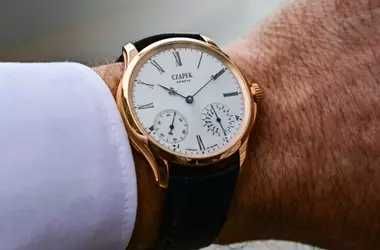
Czapek's Unexpected Rebirth: A Decade in Documentary
This documentary film delves into the ten-year journey of Czapek & Cie, a watchmaking brand that achieved an unforeseen revival. It goes beyond product launches to explore the brand's authentic, human-centric philosophy. The narrative highlights the challenges overcome, the crucial role of community, and the impactful leadership that steered Czapek to prominence within the independent watchmaking sector, culminating in the success of collections like the Antarctique.
 May 23, 2026
Celebrity Timepieces: A Look at the Week's Most Dazzling Watches
This week, celebrities showcased an array of luxurious timepieces at high-profile events. From Adam Driver's "sand-gold" Audemars Piguet Royal Oak at the Cannes Film Festival to Robert Downey Jr.'s extravagant Jacob & Co. Caviar Tourbillon at the Lincoln Center Gala, these watches underscore the enduring appeal of horological excellence among the stars. The collection features sophisticated designs and rare movements, highlighting the blend of artistry and precision in luxury watchmaking.
 May 23, 2026
Alpina & Watch Angels Unveil the Startimer Pilot Chronograph Automatic IFR: A True Aviator's Instrument
The Watch Angels × Alpina Startimer Pilot Chronograph Automatic IFR is a professional pilot's watch, not merely an aviation-inspired accessory. This limited-edition timepiece, developed in collaboration with Watch Angels, offers a mechanical solution for Instrument Flight Rules (IFR) navigation, specifically designed to aid pilots in critical holding pattern entries. Its innovative bezel and flange system provide intuitive visual guidance for direct, teardrop, or parallel entry procedures, making it a genuine tool for serious aviators and watch enthusiasts alike.