Fashion
The Dazzling Future of High Jewelry: Trends and Triumphs

Despite global shifts and economic challenges, the high jewelry sector continues to shine, demonstrating remarkable resilience and growth. Originally planning a launch in Egypt for its latest collection, Van Cleef & Arpels ingeniously pivoted, bringing its 'Fascinating Egypt' collection to Paris through an elaborate spectacle at the Palais de Chaillot. This adaptability reflects a broader trend in the luxury jewelry market, which is flourishing with an anticipated €32 billion in sales and a projected growth rate of 4-6% by 2025, marking what many are calling its most vibrant period yet. As Haute Couture Week unfolds in Paris, major fashion houses are presenting their newest high jewelry lines, showcasing pieces that were initially reserved for exclusive VIP previews. Concurrently, historical jewelry pieces are being featured in museum exhibits worldwide, reinforcing the perception of jewelry not merely as adornment, but as a significant form of art and cultural expression.
The industry is navigating several key trends, including the volatile price of gold and the scarcity of precious gemstones. Although gold prices have stabilized after a significant surge, brands have had to re-evaluate their designs and pricing strategies to maintain affordability without compromising appeal. This challenge is compounded by geopolitical factors affecting key sourcing regions, such as the US sanctions on Myanmar, a major supplier of rubies and sapphires. In response, some brands are innovatively incorporating semi-precious stones and even ancient artifacts, like Bvlgari's 'Monete' collection, which features antique coins. Simultaneously, there's a pronounced shift towards emphasizing exceptional craftsmanship, with brands like Van Cleef & Arpels highlighting intricate techniques such as the 'paysage' flexible bracelets and the 'mystery setting.' Cartier is distinguished by its dedication to glyptics, training future artisans in-house, while Pomellato elevates chains to central design elements. Dolce & Gabbana also prioritizes artisanal skill, seeing jewelry as a medium for identity expression, echoing a sentiment that value now lies in distinctive vision as much as in rare materials.
The cultural significance of jewelry is also being redefined through engaging museum collaborations and innovative exhibition formats. Beyond traditional displays, these shows are now crafted to convey deeper messages, positioning jewelry within a broader artistic and cultural context. Exhibitions like 'Glanzstücke' by Van Cleef & Arpels, which juxtaposes jewelry with masterpieces from the MAK Collection, aim to highlight shared craftsmanship and artistic vision across different disciplines. Cartier has adopted a similar co-curation approach, while Pomellato's 'The Revolutionary Jeweler' exhibition goes further by showcasing vintage advertising campaigns that champion female empowerment, aligning the brand with contemporary societal values. This strategic engagement with art and culture not only elevates jewelry's prestige but also fosters a stronger emotional connection with consumers. Furthermore, the aesthetic of layering multiple high jewelry pieces, as demonstrated at Dior's latest show, is becoming a dominant trend, allowing individuals to personalize their style and express their individuality. This approach, actively promoted in advertising campaigns, drives both desire and sales, confirming the market's robust upward trajectory with no foreseeable threats.
The high jewelry industry, through its dedication to innovative design, exquisite craftsmanship, and meaningful cultural engagement, is not just weathering economic and supply challenges but is actively shaping its future. By embracing creativity, fostering skill, and thoughtfully connecting with its audience, it continues to inspire and enchant, proving that true artistry and enduring value will always find a way to shine brightly.
Legendary editor-in-chief of Vogue and global fashion authority.
Other Articles
 Jul 06, 2026
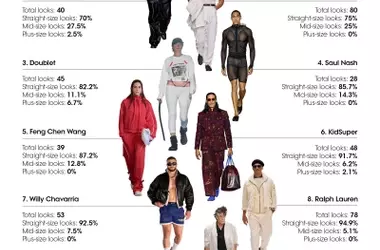
Menswear Size Inclusivity on the Runway: A Shifting Landscape for SS27
The Spring/Summer 2027 menswear shows presented a complex picture of size representation. While overall inclusivity saw a slight increase, the season was marked by a dual focus on extremely slender and hyper-muscular physiques, largely driven by cultural trends and the rise of celebrity sports stars. Plus-size representation remained minimal, primarily in Paris, raising concerns about regressive body ideals in fashion.
By Anna Wintour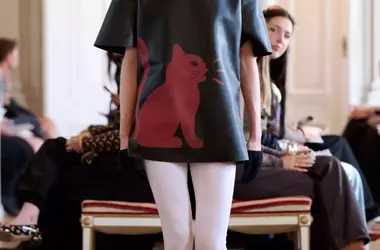 Jul 06, 2026
Andrej Gronau's Spring 2027 Collection: A Fusion of Concept and Wearability
Andrej Gronau's Spring 2027 collection, showcased at Berlin Fashion Week, reflects a profound journey of self-discovery and creative evolution. Inspired by the microcosm of a garden and the intense color palette of Francis Bacon, Gronau transforms conceptual ideas into practical, engaging fashion. His designs feature vibrant metallicized leather, abstract floral prints, and distinctive color-blocked knits, all presented in approachable, 1960s-influenced silhouettes suitable for all genders.
By Naomi Campbell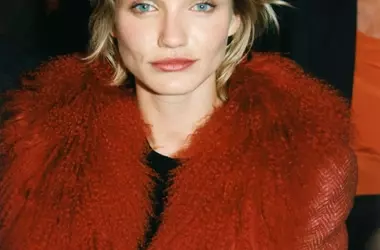 Jul 06, 2026
The Resurgence of the Bixie: A Timeless Hairstyle Making a Comeback
The "bixie" haircut, a blend of bob and pixie styles, is experiencing a significant resurgence, offering a versatile and effortless look. Popularized in the 90s by icons like Cameron Diaz and Halle Berry, this chic cut combines the structure of a pixie with the soft layers of a bob, making it suitable for various occasions and ages. Celebrities like Pixie Geldof, Florence Pugh, and Jessie Buckley are embracing the bixie, highlighting its adaptability and enduring appeal.
By Diane von Fürstenberg