Watch
The Enduring Significance of Chronometer Watches in Luxury Horology

In an age where precise time is effortlessly accessible through digital means, the mechanical chronometer watch retains its profound significance. These remarkable timepieces are not merely relics of the past but vibrant symbols of watchmaking artistry and relentless pursuit of perfection. This discussion will explore the deep-rooted history of chronometers, from their critical role in maritime exploration to their current standing as esteemed luxury items. We will examine the stringent testing and certification processes that uphold their reputation for accuracy, and ultimately, why these instruments continue to captivate enthusiasts and brands alike.
The value of chronometers extends beyond simple functionality; they embody a dedication to craft and an understanding of horological heritage that resonates with a discerning audience. The journey of a chronometer, from its foundational principles to its modern-day certifications, illustrates a narrative of human ingenuity and meticulous engineering. This article aims to clarify why chronometers, with their precise movements and rigorous standards, remain an indispensable part of the luxury watch industry and why their legacy must be preserved and celebrated.
The Historical Imperative and Evolution of Precision Timekeeping
For centuries, the precise measurement of time was not a mere luxury but a vital necessity, especially for navigation. The challenge of accurately determining longitude at sea spurred watchmakers to innovate, leading to the development of the marine chronometer. John Harrison's groundbreaking H4 in 1759 revolutionized seafaring by providing a reliable means for sailors to calculate their exact position, thereby transforming maritime travel and trade. This historical foundation underscores the instrumental value of chronometers, which, despite technological advancements, continue to symbolize the pinnacle of mechanical accuracy and watchmaking excellence.
The journey from navigational tool to luxury icon saw chronometers transition from practical instruments to prestigious artifacts. As watchmaking evolved, so did the demand for verifiable precision. The establishment of official certification bodies like COSC (Contrôle Officiel Suisse des Chronomètres) in 1973 marked a new era. These independent laboratories rigorously test watch movements against strict criteria, such as those outlined in ISO 3159, ensuring that only timepieces meeting exceptional accuracy standards earn the coveted chronometer designation. This commitment to precision reflects a respect for watchmaking's rich history and its continuous quest for improvement.
Contemporary Standards and Enduring Value of Chronometer Certification
Today, chronometer certification has diversified, with organizations like COSC, METAS, and Germany's Glashütte Observatory setting varying benchmarks for accuracy. While COSC maintains its foundational certification with a daily rate deviation of -4 to +6 seconds, newer tiers like the 'Excellence Chronometer Certification' and brand-specific standards such as Rolex's Superlative Chronometer (-2/+2 seconds per day) and Omega's METAS-certified Master Chronometer (0/+5 seconds per day) raise the bar even higher. These rigorous tests affirm the unwavering commitment of luxury brands to precision, demonstrating their technical mastery and reinforcing the value proposition for consumers.
The continuous pursuit of accuracy, exemplified by Japanese brands like Grand Seiko with their Ultra Fine Accuracy (U.F.A.) models and Spring Drive movements, highlights a core principle of watchmaking that transcends mere functionality. In a world where digital devices provide instant, infallible time, mechanical chronometers appeal to those who appreciate the complexity, tradition, and human skill involved in creating such precise instruments. Owning a chronometer signifies an appreciation for this intricate craft and a role in preserving horological heritage, connecting the wearer to a legacy of innovation and dedication to perfect timekeeping.
Other Articles
 Feb 24, 2026
Casio's Revolutionary G-SHOCK Nano DWN5600 Ring Watch: A Fusion of Durability and Miniature Design
Casio has unveiled its latest innovation, the G-SHOCK Nano DWN5600 Ring Watch, a miniaturized version of its iconic G-SHOCK series. This groundbreaking timepiece, measuring a mere 23mm, retains the legendary shock and water resistance of its larger counterparts. Available in classic G-SHOCK colors—black, red, and yellow—the DWN5600 is designed for versatility and comfort, featuring a bio-based resin case, a glass fiber-reinforced resin core, and a scaled-down strap with a metal buckle. It offers essential functions like time display, a second time zone, an alarm, and a stopwatch, making it a unique blend of practicality and novelty.
 Feb 24, 2026
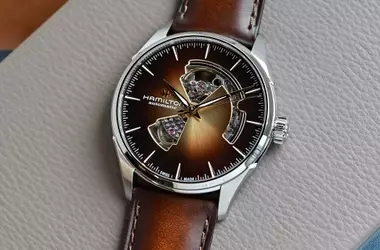
Hamilton Jazzmaster Open Heart: A Spectrum of Style and Precision
Hamilton introduces an expanded collection of its Jazzmaster Open Heart timepieces, featuring a diverse array of new dial colors and three distinct sizes. These models blend classic horological techniques with modern aesthetics, providing an immersive view into the mechanical movement without sacrificing design harmony. The series is designed to appeal to a broad audience, offering both elegance and robust functionality for everyday wear.
 Feb 24, 2026
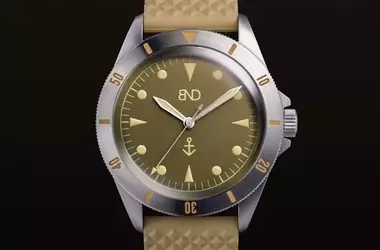
BND Unveils Mk.3 Diver: Vintage Aesthetics Meet Modern Durability
BND, a French brand, introduces its Mk.3 diver watch, blending vintage aesthetics with modern durability. Priced affordably, this timepiece boasts enhanced water resistance, a robust stainless steel case, and a reliable Seiko automatic movement. It offers three distinct color options, each featuring a classic "Old Radium" Super-LumiNova accent, catering to enthusiasts seeking a practical yet stylish dive watch for everyday wear.