Watch
The Evolution of Indian Watchmaking: From HMT to Global Innovations

India's watchmaking industry, though a late bloomer, has carved out a unique and dynamic trajectory, evolving from early European luxury imports to a globally recognized manufacturing powerhouse. This evolution was spearheaded by government initiatives, propelled by corporate innovation, and enriched by a burgeoning microbrand movement, collectively showcasing the nation's diverse capabilities in horology.
The Intricate Tapestry of Indian Timekeeping: A Detailed Account
The narrative of Indian watchmaking commenced not with domestic production, but with the allure of Swiss craftsmanship during the 19th century. During the British Raj, European luxury timepieces, often adorned with Hindu motifs to appeal to affluent Indian royalty, became status symbols. A prime example is the Jaeger-LeCoultre Reverso, famously influenced by the popularity of Indian polo among British officers. However, the true genesis of indigenous watch manufacturing began post-independence. In 1961, Hindustan Machine Tools (HMT), a state-owned enterprise established in 1953 for heavy machinery, launched its watch division in Bengaluru (then Bangalore). This initiative, driven by Prime Minister Jawaharlal Nehru's vision for national self-reliance, saw HMT produce both hand-wound and automatic models, becoming a household name with iconic series like Rajat, Janata, Kohinoor, and Pilot. By 1975, HMT achieved full in-house production, expanding its operations with five factories across the nation. Despite its initial success, HMT faced significant challenges, including stiff import taxes that created a virtual monopoly, but ultimately led to a lack of adaptation. Mismanagement and financial losses in the 2000s culminated in the closure of its watchmaking division in 2016, marking the end of an era during which HMT produced over 115 million watches, serving both civilian and military markets.
The mid-1980s heralded a new chapter with the advent of Titan, a watch brand established in 1984 by the Tata Group. Capitalizing on the "quartz crisis" that HMT largely ignored, Titan swiftly gained market share by offering affordable and stylish quartz watches. By strategically recruiting talent from HMT and focusing on contemporary designs, Titan overshadowed HMT's aging mechanical offerings. The subsequent liberalization of import restrictions in the 1990s further diminished HMT's dominance, as Indian consumers gravitated towards both modern foreign designs and Titan's appealing quartz collections. Titan's commitment to innovation was evident in its state-of-the-art factory in Hosur, Tamil Nadu, and its pioneering retail concept, "World of Titan" showrooms, which set new standards for customer experience. Breakthroughs like the thinnest water-resistant quartz movement and the Titan Edge (the world's thinnest watch in 2002) cemented its reputation for innovation. Expanding its global footprint, Titan acquired the historic Swiss brand Favre Leuba in 2011, leveraging a historical connection dating back to 1865 when Favre Leuba was the first Swiss company to establish a presence in India. Titan continued to chase market trends by developing products for untapped segments, such as the Titan Raga for Indian women in 1992, and the Fastrack sub-brand for youth. More recently, Titan has ventured into high-end mechanical watchmaking, introducing limited-edition tourbillon models like the "40 Years of Joy" in 2024 and the Nebula Jalsa flying tourbillon in 2025, demonstrating remarkable horological prowess. Today, Titan stands as the world's fifth-largest watchmaker, producing 15 to 17 million units annually, a volume comparable to the entire Swiss watch industry. Its recent innovations include the titanium Zero Hour Professional Diver 500M and the Stellar 3.0 with wandering hours, both featuring domestically produced automatic movements.
In recent years, the Indian watchmaking landscape has been further diversified by a vibrant ecosystem of microbrands. Companies like Ajwain Watch Company, with its culturally inspired designs, and Jaipur Watch Company, specializing in bespoke timepieces integrating Indian artifacts, are showcasing regional artistry. Among these, Bangalore Watch Company has emerged as a significant player, transcending the microbrand label with collections inspired by Indian aviation, space exploration, and sports. Founded in 2018 by Nirupesh Joshi and Mercy Amalraj, the brand's MACH 1 series, incorporating metal from MiG 21 jets, and the Apogee Horizon, honoring India's space program, exemplify its forward-thinking approach. Notably, Bangalore Watch Company successfully launched a watch to the edge of space, enduring extreme conditions—a testament to its vision and engineering capabilities.
The trajectory of Indian watchmaking underscores a profound transformation. What began as an appreciation for imported European timepieces evolved into a robust domestic industry, with HMT laying the groundwork for self-sufficiency. Titan’s strategic adaptability and focus on market trends propelled it to global prominence, while the rise of innovative microbrands like Bangalore Watch Company demonstrates a dynamic and creative future. Though not yet rivaling established giants in marketing perception, India's sheer production volume, coupled with its growing expertise in both mass-market and haute horology, positions it as an increasingly influential force in the global watch industry. This journey reveals a nation not just telling time, but also mastering it.
Other Articles
 May 30, 2026
Driving Impressions: The 2026 Porsche 911 GT3 Touring (992.2) Evaluated
This article delves into a comprehensive driving review of the 2026 Porsche 911 GT3 Touring (992.2), comparing it to its track-focused sibling and other 911 variants. It explores the nuances of its performance, daily usability, and overall driving experience, offering perspectives from two avid automotive enthusiasts who test-drove the vehicle. The authors highlight the car's exhilarating power and handling while also addressing its practical shortcomings for everyday use.
 May 30, 2026
Top 10 Dive Watches Under €2,000
The dive watch market under €2,000 is more vibrant than ever, offering an impressive array of options that blend compelling designs, strong wearability, and exceptional value. Unlike a decade ago, when this segment was dominated by basic Swiss models or overly large tool watches, today's selections cater to enthusiasts seeking refined aesthetics, balanced proportions, and robust performance. This curated list highlights ten outstanding dive watches available in 2026 that exemplify these qualities, proving that high quality and distinctive style can be found without a hefty price tag.
 May 30, 2026
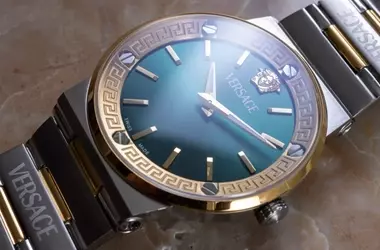
Versace Greca Logo Aero: A Fusion of Style and Affordability
The Versace Greca Logo Aero watch series introduces a stylish and accessible option for fashion enthusiasts. This review highlights the two-tone steel and gold-tone model with a vibrant metallic green dial, alongside an all-gold-tone version. These quartz-powered timepieces offer a slender profile, integrated bracelet design, and the iconic Versace aesthetic, targeting a demographic that appreciates luxury fashion without the premium cost of mechanical movements.