Watch
Head-to-Head: Longines HydroConquest vs. Tudor Black Bay "Monochrome"

This Sunday, we delve into a horological debate, pitting two prominent dive watches against each other: the refreshed Longines HydroConquest and the acclaimed Tudor Black Bay "Monochrome." While both offer modern interpretations of classic diving timepieces, they stand at distinctly different price points, prompting a closer look into whether Tudor's premium justifies its higher cost. Last week's competition saw the Mido Ocean Star 200 triumph over the Hamilton Khaki Scuba Auto, setting a high bar for performance and design.
Longines HydroConquest vs. Tudor Black Bay “Monochrome”: A Deep Dive into Specifications and Value
Daan and Jorg, two respected horology enthusiasts, present their cases for the Longines HydroConquest and the Tudor Black Bay "Monochrome," respectively. The Longines HydroConquest, re-released in March with an updated design, carries a price tag of €2,200 for the stainless steel bracelet version. In contrast, the Tudor Black Bay "Monochrome" demands a significantly higher €4,900 for its three-link bracelet variant, making it more than twice as expensive.
Daan champions the Longines, emphasizing its exceptional value. The updated HydroConquest boasts a robust stainless steel construction, available in 39mm or 42mm sizes, and an impressive 300-meter water resistance. It is powered by Longines' L888.2 automatic movement, offering a 72-hour power reserve and magnetic resistance. A notable improvement is the refined dial design, which foregoes the previous oversized Arabic numerals, now complemented by a ceramic bezel insert and an elaborately engraved case back.
Conversely, Jorg defends the Tudor, acknowledging the HydroConquest's strengths but arguing for the Black Bay's superior qualities. The Tudor Black Bay "Monochrome" comes exclusively in a 41mm size and a single color option. While its water resistance is 200 meters and it features an aluminum bezel insert, its movement — the in-house automatic MT5601-U — stands out. It offers a 70-hour power reserve, magnetic resistance, and, crucially, is both COSC and METAS-certified, earning it the Master Chronometer status. This translates to a higher accuracy of 0 to +5 seconds per day, compared to the Longines' official rating of -5 to +15 seconds per day.
The debate extends beyond mere technical specifications to aesthetic appeal and historical connection. Daan argues that the aesthetic differences between the two, despite Tudor's slightly more refined finishing, do not warrant the substantial price gap. He points out that both watches feature practical elements like on-the-fly micro-adjustment bracelets and screw-down crowns. Furthermore, the HydroConquest offers blue lume for enhanced readability in low light, a feature absent in the Black Bay. Longines also provides a wider array of color options and sizes for its HydroConquest collection.
Jorg, however, highlights the Black Bay's strong emotional appeal and historical lineage. He argues that Tudor's dive watch heritage, deeply rooted in its connection to Rolex and the iconic Tudor Submariners of the 1950s, offers a romance that the HydroConquest, a more recent series introduced in 2007, cannot match. The Black Bay "Monochrome" is praised for shedding "faux-tina" and gilded elements, presenting itself as a true modern successor to the classic Submariner, with a design that resonates deeply with watch enthusiasts. Jorg believes that for many collectors, the intrinsic value lies not just in specs but in the narrative and emotional connection a timepiece offers, justifying the higher investment for the Tudor.
The discussion raises a pertinent question for watch aficionados: is the enhanced accuracy and historical depth of a premium timepiece worth more than double the cost of a technically competent and aesthetically pleasing alternative? The Longines HydroConquest, with its competitive pricing and solid features, presents a compelling case for value, while the Tudor Black Bay "Monochrome" appeals to those who prioritize precision certification, historical authenticity, and a more profound emotional engagement with their watch.
Other Articles
 Aug 09, 2026
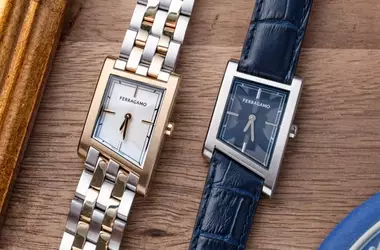
Ferragamo Asymetrique Watch: A Surprising Gem in Fashion Horology
This article explores the Ferragamo Asymetrique watch, a dress watch that challenges perceptions of fashion timepieces. Unlike many conventional fashion watches, it boasts a unique asymmetrical design, drawing comparisons to the Cartier Tank but with a distinct twist. The review highlights its refined craftsmanship, subtle branding, and comfortable wearability, making it a noteworthy contender in its segment despite being a quartz movement from a fashion house. The piece delves into its design nuances, technical specifications, and overall value proposition, positioning it as a pleasant surprise for watch enthusiasts and a strong offering for its target demographic.
 Aug 08, 2026
The Evolution and Importance of Measuring Seconds in Timekeeping
The measurement of seconds, initially absent in early timepieces, transformed significantly with Christiaan Huygens' pendulum and balance spring inventions. This breakthrough enabled the widespread adoption of minute and second hands, making timekeeping more precise. Over centuries, seconds became crucial for scientific advancements, specialized timepieces like chronographs, and ultimately, the functioning of modern global infrastructure, from GPS to financial markets.
 Aug 08, 2026
Celebrity Wristwear: A Look at the Week's Most Notable Timepieces
This week's celebrity watch sightings highlight recurring themes among discerning collectors, from the timeless appeal of Cartier Tanks sported by rising stars Drew Starkey and Callum Turner to the bold statements made by Audemars Piguet Royal Oaks on Erling Haaland and Roman Reigns. Classic Rolex models also found favor with Bobby Flay and Shane Gillis, showcasing the enduring allure of iconic horology in the public eye.