Fashion
Jane Benson's 'her her' Exhibition: A Feminist Reinterpretation of Mary Shelley's Frankenstein

Jane Benson's latest exhibition, "her her," offers a compelling artistic reinterpretation of Mary Shelley's classic novel, Frankenstein, by positioning the creature's narrative as a profound expression of female experience. While popular culture often frames Frankenstein as a horror tale exploring male ambition and its consequences, Benson, a British-born, New York-based conceptual artist, emphasizes a frequently overlooked aspect: the creature's voice, which she believes echoes Mary Shelley's own struggles and the broader plight of women in a patriarchal society. The novel's six chapters from the creature's perspective, brimming with raw emotion, reveal a journey of discovery—from understanding language and marveling at nature's beauty to experiencing the pain of rejection, anger, and profound loneliness. Benson’s work resonates with scholarly interpretations by figures like Barbara Johnson and Ellen Moers, who have previously explored themes of motherhood and female authorship embedded within Shelley's Gothic masterpiece. Benson envisions the creature's profound sense of isolation, grief, desertion, and betrayal as emblematic of the challenges women historically faced, making a powerful argument for a feminist reading of the text.
Benson's artistic process involved a meticulous study of a limited-edition facsimile of Shelley's original Frankenstein manuscript, which became the foundational material for her exhibition. Her works, predominantly text-based drawings, directly incorporate Shelley’s handwriting, allowing the author's own words to articulate the creature's tragic journey. The exhibition showcases over two dozen pieces, many featuring enlarged sections of Shelley's pages, sometimes layered on iridescent yellow film, creating a vibrant, almost pulsating visual effect. A significant piece, also titled her her, draws attention to crossed-out words in the manuscript, symbolizing the historical negation of women. Another innovative series, the "solfège" pieces, extracts musical syllables from the text, which are then performed by mezzo-soprano Hai-Ting Chinn, transforming the written word into an auditory experience. Additionally, her "counter works" creatively fill the enclosed spaces within letters, forming rhythmic patterns that highlight select poignant sentences, underscoring the deep emotional resonance Benson found within Shelley's writing.
Benson's engagement with Frankenstein deepened after she became a mother and revisited the novel, which she had first encountered in her youth. This re-reading led her to question the conventional portrayal of the creature as merely a monster, instead perceiving it as a representation of an individual misunderstood and feared by society—a parallel she draws to Mary Shelley herself and other women who challenged societal norms. The creation of Frankenstein was not only a product of a gothic ghost story challenge but also deeply influenced by Shelley's personal tragedies, including the loss of her mother shortly after birth and multiple children in infancy. These profound experiences of grief and loss, as Benson points out, are inextricably linked to the novel's emotional depth. The exhibition further includes graphite drawings of elm trees, an homage to both Shelley's grief and Benson's own recent loss of her father, and a symbolic connection found in Shelley's manuscript doodles of English elms, signifying resilience and continuity across time.
Through her innovative artistry, Jane Benson urges viewers to transcend superficial interpretations of classic literature and delve into the deeper, often overlooked, human experiences embedded within. Her work serves as a powerful reminder that empathy and understanding are essential in recognizing the voices of those marginalized, whether in fiction or reality. By highlighting the emotional depth and societal critiques within Frankenstein, Benson's exhibition encourages a more nuanced appreciation of both literature and the persistent struggles for recognition and justice that resonate across generations.
Former creative director and editor-at-large at Vogue, a towering and influential figure in fashion journalism.
Other Articles
 Oct 27, 2026
Celebrity Halloween Transformations: A Decade of Iconic Costumes
Celebrities consistently showcase innovative and memorable Halloween costumes each year, transforming into a diverse array of characters. From classic movie homages to pop culture references and elaborate fantasy figures, these stars leverage their flair for dramatic character portrayal, making Halloween a highlight of their public appearances. This annual spectacle, whether flaunted on social media or at exclusive parties, underscores their creativity and dedication to the festive spirit.
By Gloria Vanderbilt Oct 27, 2026
Amy Winehouse: A Fashion Icon's Enduring Influence
Amy Winehouse's distinctive style, characterized by her beehive hair, cat-eye eyeliner, and vintage-inspired clothing, set her apart from her contemporaries in the early 2000s. Two decades after her seminal album 'Back to Black', her influence on music and fashion continues to resonate, marked by new exhibitions, tribute concerts, and a resurgence of 2008 fashion trends. She championed individuality and imperfect beauty, creating a look that was uniquely her own and impossible to replicate.
By Vivienne Westwood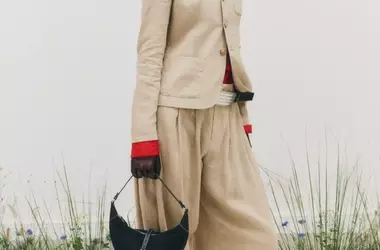 Oct 27, 2026
Embrace the Crescent: The Must-Have Bag Trend of the Season
Discover why crescent-shaped bags are dominating the fashion scene. This article highlights their unique blend of architectural design and soft lines, offering both practicality and elegance. From luxurious leather to playful prints, these bags are incredibly versatile, effortlessly elevating any outfit. Explore a curated selection of the best crescent bags to add a touch of intentional style to your wardrobe this season.
By Diane von Fürstenberg