Fashion
New York City's Distinct Fashion Neighborhoods: A Guide to Shopper Profiles

In the vibrant tapestry of New York City, each district cultivates its own unique sartorial identity, attracting a distinct clientele. As fashion labels seek to broaden their presence, establishing multiple outlets within the same metropolis, a deep understanding of consumer behavior becomes paramount. This strategic approach involves meticulously analyzing who shops where, moving beyond mere demographics to capture the essence of each neighborhood's fashion ecosystem.
For instance, while Madison Avenue and the Meatpacking District have long been synonymous with high-end brands like Hermès, the luxury house's bold move into Brooklyn's Williamsburg initially raised eyebrows. Yet, this unconventional gamble proved successful, leading to a permanent establishment that caters to a previously untapped market. Similarly, the downtown-centric brand Still Here discovered an unexpected affinity for the Upper East Side, proving that discerning customer movements can reveal lucrative opportunities beyond established perceptions. These success stories underscore the evolving retail landscape, where adaptability and insight into local nuances are key to growth. Vogue Business introduces 'Neighborhood Watch', a series designed to arm brands with crucial intelligence on shopping patterns, starting with the diverse retail environments of New York City, particularly as it kicks off Spring/Summer 2027 fashion week.
Across New York, distinct shopper archetypes emerge, each with unique preferences and habits. The Lower East Side attracts the 'Artfully Messy Girl', an individual aged 21-35, often working in creative fields with an annual income around $80,000, and a discretionary spend of approximately $7,000. She gravitates towards vintage finds, independent designers like Bode and Eckhaus Latta, valuing uniqueness over brand-new luxury. In stark contrast, the Upper East Side is home to the 'Fastidious Mother and Private School Daughter', typically aged 35-80, with significantly higher incomes exceeding $450,000 and a discretionary spend of $150,000+. This demographic favors established luxury brands such as Chanel, Khaite, and Cartier, often purchasing for immediate social engagements. The West Village features the 'West Village Girls', aged 23-40, who are style-conscious professionals in PR or finance, earning between $85,000 to $150,000, with a discretionary spend of $15,000 to $50,000. They are drawn to contemporary trends and brands like Aritzia and Dôen. Williamsburg appeals to the 'Creative Yuppie', aged 26-38, involved in design or architecture, with an annual income of $130,000 and a discretionary spend of $45,000. This shopper meticulously curates their wardrobe, mixing vintage pieces with practical basics from Uniqlo and statement items. Finally, SoHo attracts the 'Swipe-Happy Shopper', aged 22-50, often visitors from out of town with substantial incomes ($180,000+) and high discretionary spending ($70,000+). They engage in high-value, single-transaction purchases from a wide array of luxury and trend-driven brands like Chanel, Dior, and Paloma Wool, treating shopping as an integral part of their New York experience. These varied profiles highlight the importance for brands to understand and cater to the specific tastes and financial capacities of each neighborhood's consumer base.
Understanding and responding to these distinct shopping cultures is more than a commercial strategy; it is a recognition of the diverse aspirations and identities that animate urban life. By engaging with these specific communities, brands contribute to the richness of the city's cultural fabric, fostering connections that transcend mere transactions and reinforce the idea that commerce can be a powerful force for community building and self-expression.
Fashion designer and author, best known for the wrap dress and her writings on style and female empowerment.
Other Articles
 Sep 09, 2026
New York Fashion Week Spring/Summer 2027: A Packed Schedule and Fresh Energy
New York Fashion Week for Spring/Summer 2027 is set to begin on September 10, bringing a wave of excitement and a densely packed schedule of shows, presentations, and events. This season marks the anticipated return of Diane von Furstenberg to the official calendar under new creative direction, alongside a mix of established and emerging designers. The city is abuzz with activity, reflecting the increasing importance of the US market in the global fashion landscape.
By Gloria Vanderbilt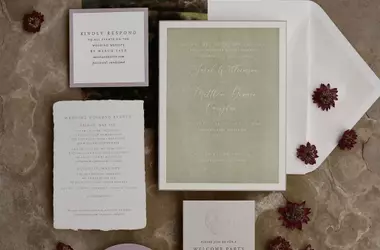 Sep 09, 2026
A Coastal Affair: Sarah Hancock and Matthew Conaghan's Enchanting Santa Barbara Wedding
Sarah Hancock and Matthew Conaghan's wedding celebration was a testament to both serendipitous beginnings and meticulous planning. Their journey began with an unexpected encounter in Santa Monica, evolving into a friendship that blossomed into a profound connection. The proposal, though anticipated, was a weekend of magical moments at San Ysidro Ranch, marking a new chapter. Their Santa Barbara wedding, held at Sarah's great-grandmother's historic home, was a reflection of their shared vision: a blend of timeless Californian elegance and coastal charm, meticulously brought to life by Laurel & Rose.
By André Leon Talley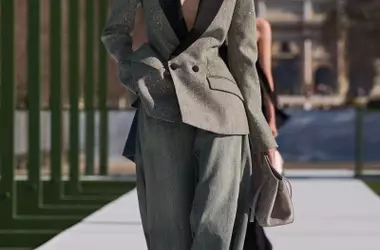 Sep 09, 2026
Forecasting Fall Fashion: Insights from Astrologers, a Tarot Reader, and a Psychic
As summer's heat lingers, the fashion world looks ahead to autumn trends. This article explores predictions for fall fashion from an astrologer, a tarot reader, and a psychic. They foresee a season of harmonious beauty, flattering silhouettes, rich earthy tones, intricate patterns, and a shift towards timeless, personalized styles. Expect cinched waists, luxurious fabrics, draped dresses, and a departure from overly curated looks.
By André Leon Talley