Watch
The Resurgence of Jumping Hour Watches

Jumping hour watches, characterized by their distinctive digital display where the hour numeral instantly advances, are currently experiencing a remarkable renaissance in the world of haute horology. What began as a mechanical marvel in the late 19th century, briefly popular during the Art Deco movement, has now re-emerged as a compelling trend. This resurgence is marked by a flurry of introductions from esteemed watchmakers, signaling a renewed appreciation for these unique timepieces that blend historical ingenuity with contemporary design.
The Intricate Revival of Digital-Display Timepieces
The journey of the jumping hour watch is a testament to the cyclical nature of horological trends. In the late 19th century, Austrian engineer Josef Pallweber's innovative mechanism, which allowed for an instantaneous display change, revolutionized timekeeping. Brands like Cortébert and IWC Schaffhausen embraced this technology, offering what seemed like a magical, digital-style interface in an analog world. However, this initial popularity waned as traditional analog watches dominated the market.
A brief return to prominence occurred during the Art Deco era, where the minimalist and geometric aesthetics of jumping hour wristwatches, often housed in rectangular cases, perfectly complemented the design sensibilities of the time. Yet, their appeal once again faded, and for many decades, these watches remained niche items, with notable exceptions such as A. Lange & Söhne's Zeitwerk collection in 2009.
The current revival began to gain momentum in January 2025 with Louis Vuitton's unveiling of the Tambour Convergence. This innovative piece reinterpreted the jumping hour concept with a 'dragging indication' system, featuring rotating discs and a distinctive lozenge marker for reading hours and minutes. Available in elegant gold and diamond-set platinum variations, it set the stage for what was to come.
The trend accelerated at Watches and Wonders 2025, where Cartier captivated enthusiasts with its Tank à Guichets, a series of rectangular timepieces infused with Art Deco influences. Concurrently, Bremont introduced its Terra Nova Jumping Hour model, offering stylish iterations including a sleek 38mm Stealth Black version. These releases collectively affirmed the re-establishment of jumping hour watches as a significant market trend.
Further cementing this revival are more recent launches, such as Czapek Genève’s retro-futuristic Time Jumper, part of its 10th-anniversary collection, and Audemars Piguet’s striking Neo Frame Jumping Hour. The latter, with its Streamline Moderne design, pays homage to the jumping hour wristwatches produced by the brand in the 1920s, bridging past and present with a bold aesthetic statement.
Reflections on a Horological Comeback
The burgeoning popularity of jumping hour watches underscores a fascinating dynamic within the luxury watch industry. As noted by Stephen Pulvirent, founder of Rime & Reason, watch brands often follow successful trends, much like the widespread adoption of integrated bracelet sport watches following the success of iconic models like the Royal Oak and Nautilus. The jumping hour trend, while perhaps on a smaller scale, reflects this same phenomenon.
Pulvirent highlights the broad appeal of the jumping hour mechanism itself. It is a complication that is intuitively understood, allowing brands to showcase their technical prowess without complex explanations. The visual spectacle of digits instantly changing possesses a "toy-like" quality that engages collectors and enthusiasts alike. This ease of comprehension, combined with the intricate mechanical know-how required to create such movements, makes these watches particularly attractive.
Beyond aesthetic and mechanical allure, the resurgence also speaks to strategic business pragmatism. Brands are constantly seeking ways to retain existing collectors and attract new ones. For a collector already possessing a range of timepieces, a jumping hour watch offers a refreshing variety and novelty. Moreover, it can serve as an accessible entry point for new collectors who might find traditional designs less appealing. Once a collector is drawn into a brand's universe through a distinctive piece like the Neo Frame, the opportunity arises to introduce them to other offerings, fostering long-term engagement and loyalty. This intricate dance between historical reverence, mechanical innovation, and market strategy continues to shape the evolving landscape of luxury horology.
Other Articles
 Mar 02, 2026
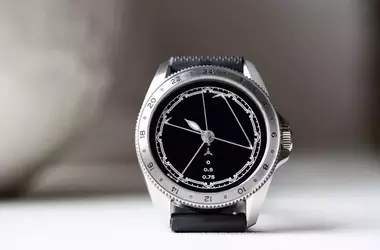
Ardra Labs Delta Type: Revolutionizing GMT Displays for All Time Zones
The Ardra Labs Delta Type watch introduces a groundbreaking GMT display capable of tracking all global time zones, including those with 30- and 45-minute offsets. This Swiss-made timepiece, priced at $2,450, features a unique "PAN-GMT" system powered by a Sellita SW-330 movement, offering an innovative solution for travelers and global citizens.
 Mar 02, 2026
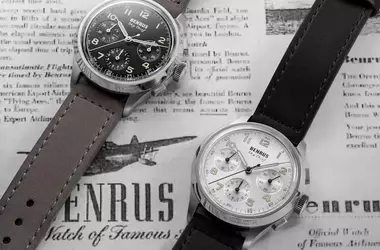
The Resurgence of the Benrus Sky Chief: A Timeless Aviator's Chronograph
Benrus introduces a contemporary iteration of its classic Sky Chief chronograph, blending vintage charm with modern enhancements. This new model retains the beloved aesthetic and compact size of the original 1940s pilot's watch, while offering improved wearability and a COSC-certified automatic movement. Priced at $3,950, it aims to deliver a high-quality, vintage-inspired experience to watch enthusiasts.
 Mar 02, 2026
Celebrity Timepieces: A Glimpse into the SAG Actor Awards' Most Exquisite Watches
The SAG Actor Awards red carpet was a dazzling display of horological excellence, with stars showcasing an array of sophisticated timepieces. From Michael B. Jordan's neo-vintage Piaget Limelight to Adam Brody's elegant Cartier Tank à Guichets, this year's event highlighted a resurgence of classic and smaller dress watches, alongside a few bold, contemporary statements.