Watch
The Secondary Watch Market Sees a Resurgence Driven by Luxury Brands

The pre-owned luxury watch market is experiencing a notable revival after a prolonged period of contraction. Following thirteen consecutive quarters of price declines, the secondary market for timepieces began to show signs of recovery in the latter half of last year, maintaining an upward trajectory through the final quarter. This positive shift is predominantly attributed to the robust performance of leading luxury watch manufacturers, while a majority of other brands continue to face downward pressure on their secondary market valuations.
A comprehensive report, compiled by WatchCharts in partnership with Morgan Stanley, highlights that the overall secondary market prices saw an annual growth of 4.9 percent by December 31. This contrasts sharply with the preceding two years, 2023 and 2024, which recorded full-year price reductions of 10.7 percent and 6.1 percent, respectively. However, the report underscores a crucial point: this resurgence is disproportionately influenced by a select group of high-end brands.
Specifically, the triumvirate of luxury watchmaking—Audemars Piguet, Rolex, and Patek Philippe—were identified as the primary drivers of this market recovery. Patek Philippe led the pack with an impressive 12.1 percent increase in year-over-year prices, closely followed by Rolex, which saw a 4.6 percent rise. Other prominent brands like Omega and Cartier also contributed positively, achieving year-over-year price growths of 2.4 percent and 3.4 percent, respectively. In stark contrast, the report revealed that prices for 28 out of the 35 tracked brands experienced declines, indicating a widening gap between the elite brands and the broader market.
The final quarter of 2025 marked a significant turning point, characterized by a more widespread recovery. During this period, prices increased for 21 of the 35 brands monitored. Patek Philippe continued its strong performance with a 7.6 percent increase from the previous quarter, while Audemars Piguet rebounded with a 1.8 percent growth after three quarters of stagnation. Rolex's prices remained stable quarter-over-quarter. Even major watch groups such as Swatch Group, Richemont, and LVMH registered modest gains, each below 1 percent, signaling a broader, albeit slow, market improvement.
Despite these positive trends in the secondary market, the report also highlighted challenges related to value retention. Persistent increases in retail prices, which averaged 7 percent since January 2025, have impacted the value retention across all brands. While the top three luxury brands continue to command prices above retail, most other brands now exhibit value retention rates below 30 percent. This dynamic has driven more consumers towards secondary channels, particularly for brands offering significant discounts, leading to increased transaction volumes for brands like IWC and Tudor, which saw secondary market transaction values grow by 17.8 percent and 21.8 percent, respectively.
Overall, the market has transitioned into what analysts describe as the “post-post-Covid era,” with 2025 serving as a critical inflection point. The market dynamics, previously shaped by the aftermath of the Covid-era watch bubble and subsequent corrections, are now influenced by macro factors such as higher retail prices, rising gold costs, and a weakening U.S. dollar. Despite these inflationary pressures, the secondary market's value proposition for most brands is stronger than ever, reflecting a shift towards pragmatic consumption rather than speculative buying, leading to increased demand and activity.
Other Articles
 Feb 02, 2026
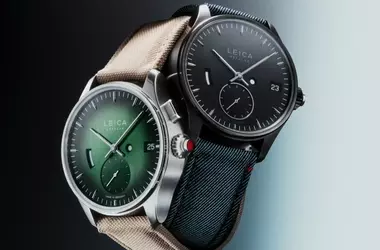
Leica's Precision Horology: Unveiling the ZM 1 and ZM 2 Movements
Leica, renowned for its photographic equipment, is expanding its presence in high-end mechanical watchmaking with the ZM 1 and ZM 2 collections. These timepieces are powered by the brand's proprietary hand-wound Caliber LH-10 and Caliber LH-20 movements, developed in collaboration with Lehmann Präzision. The watches seamlessly integrate Leica's iconic design language, drawing inspiration from its cameras while embodying German engineering principles. This venture marks a return to Leica's roots in micro-engineering, emphasizing precision and functionality in every detail.
 Feb 02, 2026
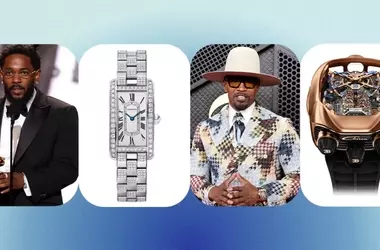
Grammy Awards 2026: The Most Exquisite Timepieces on Display
The 68th annual Grammy Awards showcased an array of opulent watches on the wrists of music's biggest stars. From diamond-studded Hublots to classic Cartiers, celebrities flaunted their exquisite taste in horology. This article delves into the most striking timepieces, highlighting both the extravagant and surprisingly understated selections that graced the red carpet and stage.
 Feb 02, 2026
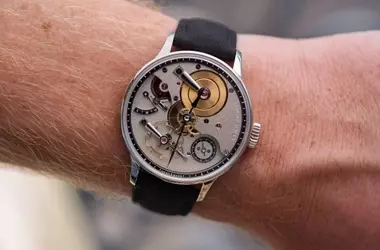
Greubel Forsey's Vision: Leadership, Sustainability, and the Future of High Horology
Michel Nydegger, CEO of Greubel Forsey, shares insights on the brand's unique leadership approach, focusing on collaboration and sustainability rather than traditional management. He discusses the importance of long-term vision, controlled production volumes, and the commitment to crafting timepieces that meaningfully contribute to watchmaking history. Nydegger also touches upon the brand's diverse offerings and hints at exciting future collaborations with the Time Aeon Foundation, reinforcing Greubel Forsey's dedication to innovation and preserving horological artistry.